
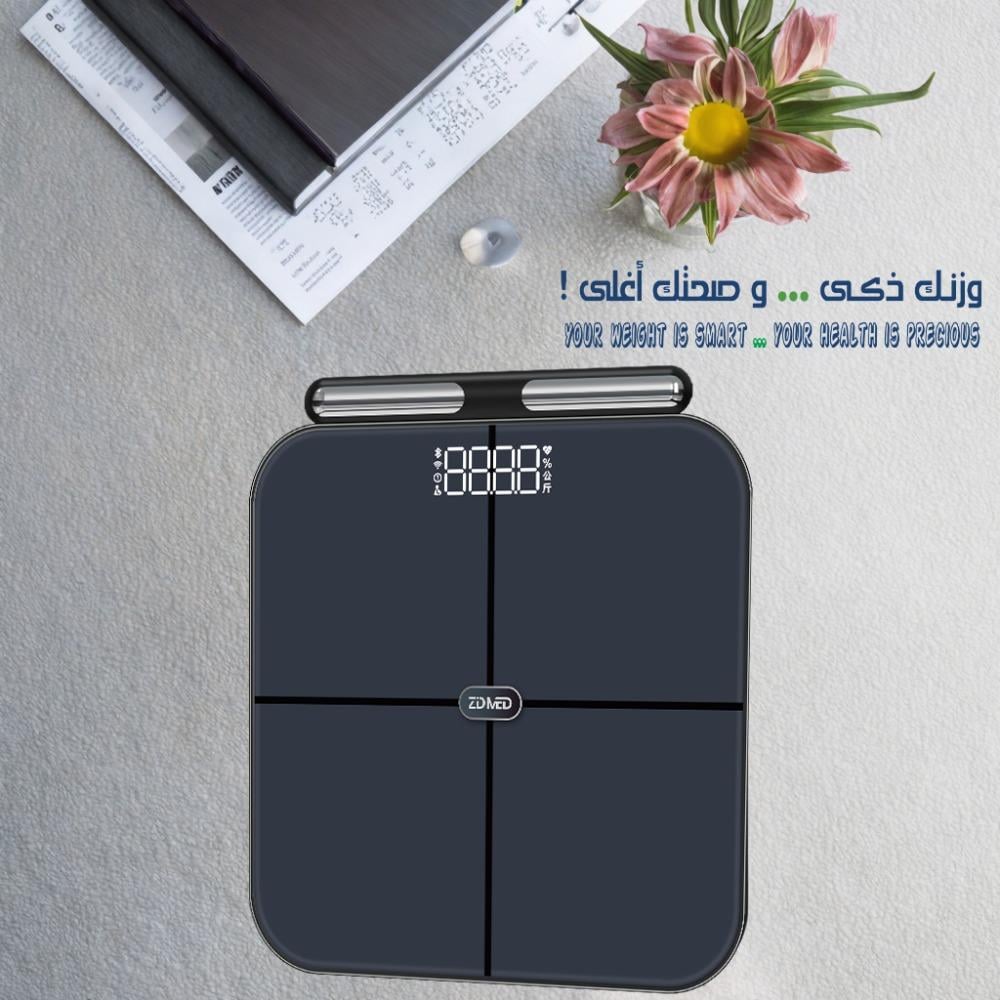
The Smart Scale Has Become an Essential Tool for Anyone Who Wants to Monitor Their Health and Get Closer to Their Ideal Weight
Whether your goal is to lose weight, maintain it, or even understand your body composition, the method you use affects the accuracy of the results. This is especially true when using an electronic scale to measure weight and fat, as these devices rely on precise sensors and signals. In this article, we explain how to use a smart scale correctly to get accurate and reliable results.
How to Use a Smart Scale
1 – Place the scale on a solid and level surface
If you place the scale on a carpet or uneven floor, the readings will be incorrect because the sensors need a stable base to measure pressure accurately.
Place the scale on fixed ceramic tiles or parquet, make sure there’s no dirt or water underneath, and if the scale has auto-calibration, turn it off and on after placing it so it can recalibrate.
2 – Weigh yourself in the morning before eating
Weight is affected by food, drinks, and clothing, so the morning, right after waking up and before breakfast, is the best time for a stable reading because the body is in a short fasting state. This allows you to track real changes instead of daily fluctuations.
Pick a fixed day of the week and the same time, and take measurements under the same conditions each time so you can monitor progress in weight or calculate your ideal weight.
3 – Wear light clothing during measurement
Every piece of clothing adds weight, and the goal is to know your body weight, not the weight of your clothes. The difference can be half a kilogram or more if you wear heavy items.
Wear very light clothes, or remove them if privacy allows, and record the reading. If you can’t, estimate the weight of your clothes and subtract it from the reading.
4 – Stand in the center of the scale and remain steady to distribute weight evenly
The weight sensors are distributed under the scale. If you lean to one side or place more weight on one foot, the reading changes. Some scales that measure body fat require you to stand still without movement.
Place your feet in the center of the metal plates at shoulder-width apart, distribute your weight on both feet, and stand still for ten seconds until the reading completes. Do not move your hands or bend over.
5 – Stand barefoot, not in socks or shoes
Many smart scales rely on Bioelectrical Impedance Analysis (BIA), which requires direct contact between the skin and the metal plates to measure water and fat percentages. Socks prevent contact and reduce accuracy.
6 – Weigh yourself once a week under the same conditions for consistent results
Weight fluctuates daily due to fluids, salt, and hormones. Weighing once a week on the same day and time provides a true trend of changes and reduces noise. Choose a fixed day of the week and time, and record every reading in the scale’s app or a notebook. This method helps you calculate your ideal weight and track whether you’re on the right path.
Now you understand why every detail in the measurement process is crucial for an accurate reading. Following these simple steps ensures that your smart scale gives you a clearer picture of your journey toward your ideal weight, allowing you to track your progress with confidence and high accuracy.
If you want to try a more professional experience, try a smart fat scale with WiFi, as it connects results automatically to a mobile app and makes measuring weight and analyzing your body easy, comfortable, and precise.